
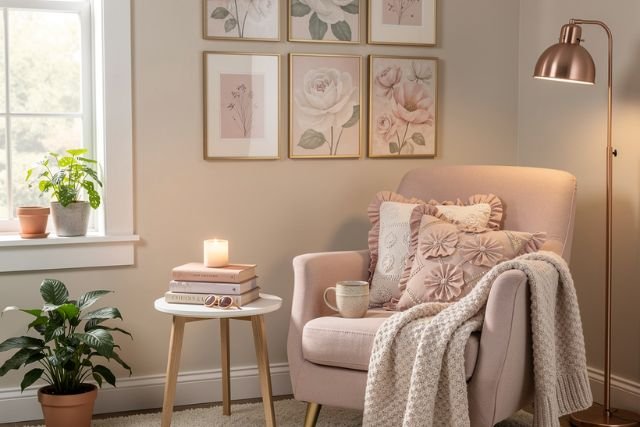
A cozy reading nook can be your quiet reset button. It gives introverts a private corner to recharge, read, and feel safe in their own space.
Why a Reading Nook Helps
Solitude is different from loneliness. Psychologists highlight that solitude can have benefits, while loneliness is about feeling disconnected, and they note that many adults spend a large share of their waking hours alone anyway.
Research also shows that time alone can support well-being, emotion regulation, and cognitive restoration when it is chosen and feels positive. Another study found that on days people spent more time alone, they reported less stress and more autonomy satisfaction.
That matters for introverts. A reading nook is not just decor. It is a boundary you can see and feel, which makes quiet time easier to protect.
Pick the Right Corner
Start by choosing a spot that already feels calm. Look for lower traffic areas, like the end of a hallway, a bedroom corner, a wide landing, or the far side of a living room. Also notice sound. If the space sits near a TV wall or a busy kitchen path, you will fight noise all the time.
Next, decide what “private” means for you. Some people want full visual privacy. Others just want to feel slightly tucked away. If you rent or have limited space, you can still create privacy with a tall plant, a bookcase, a curtain panel, or a folding screen.
Then, think about light. If you love morning reading, place your nook near a window. If you read at night, plan for a lamp that gives steady light without glare. A calm nook is not always dim. It is controlled.
Comfort First Design
Your reading nook should support your body, not just look cute in photos. So, start with seating. Choose one “sink in” seat, like a deep chair, a chaise, or a wide loveseat. If space is tight, a floor cushion and a supportive back pillow can work, as long as your neck and lower back feel good after ten minutes.
Now add warmth through layers. Use a soft throw, a small pillow, and a rug that feels good on bare feet. Texture matters because it signals comfort fast. Also, it helps your brain switch into rest mode.
After that, handle sound. Try thick curtains, a plush rug, and fabric seating to absorb echo. If you need more, add a small fan or a white noise machine to mask sudden sounds. Quiet is not always silence. Often it is steady sound that feels predictable.
Finally, bring in nature. Systematic review research on indoor plants reports psychological benefits, including increased positive emotions and reduced negative feelings in many studies. Even one easy plant can change the mood of a corner. Pick low effort options if you want calm, not chores.
Reading Nook Ideas for Small Spaces
You do not need a spare room. You need a clear plan. Here are reading nook ideas that work in real homes and apartments.

1. Closet Reading Nook
Remove the lower rod, add a bench cushion, and hang a small sconce style lamp that plugs in. Then use the upper shelf for books. Because the nook is literally enclosed, it can feel extra safe and quiet.

2. Window Seat Corner
If you already have a window ledge or a small bay window, build the nook around it. Add a cushion, two pillows, and a warm throw. Also place a small side table nearby for tea and bookmarks.

3. Bedroom Corner Reading Nook
This is perfect if your home feels busy. Use a chair, a soft lamp, and a small basket for your current reads. Keep it separate from your bed so your brain can tell the difference between reading time and sleep time.

4. Bookshelf “Cove” Nook
Place a chair beside a bookcase so the shelf becomes a side wall. Add a plant on the outer edge to block sight lines. This creates a tucked in feeling without building anything.

5. Under the Stairs Nook
If you have an unused under stair area, claim it. Use a bench with storage, a wall light, and a rug. Since it is naturally enclosed, it reads as a private corner right away.

6. Balcony or Porch Nook
If you have outdoor space, make it your quiet reading corner. Use a weather safe chair, a blanket, and a small side table. Just add a soft light for evening reading.
Also consider tech boundaries. Many introverts recharge faster when the nook is not full of notifications. So, try a simple rule like “phone stays on the charger across the room.” If you want music, choose one calm playlist and keep the volume low.
Make it a Recharge Ritual
A nook works best when you use it the same way most days. Routine creates comfort. It also removes decision fatigue.
Start with a simple entry cue. For example, turn on your reading lamp, pour tea, and sit down. Then set a gentle time goal, like ten pages or fifteen minutes. Small wins make the habit stick.
Next, match your reading to your nervous system. If you feel overloaded, choose easy fiction, essays, or a reread. If you feel restless, try a short chapter book or a collection of quick stories.
Research even suggests reading style can matter. A 2024 study on reading modalities reported that paper text reading and audio reading reduced anxiety levels, and the study also found improvements in sleep quality with some reading approaches. So, if screens keep you wired, your nook can be a screen free zone.
Finally, keep your nook “ready.” Reset it in one minute. Put the book back, fold the throw, and clear the cup. When your corner looks inviting, you will use it more, and that is the whole point.
Your Quiet Corner Starts Now
A reading nook is more than a cute spot. It is a simple way to protect chosen alone time, which can support well-being when it feels positive and intentional. Start small, pick one corner, and make it feel like yours. Focus on comfort first, then add privacy, soft light, and one calming touch like a plant or a cozy throw. Keep the space ready so it welcomes you fast. Your next reset can be as easy as sitting down, opening a book, and breathing again


